Gainesville, GA · Garage Door Service
Opener installation for Gainesville, GA homes built mostly in the 2000s, sized right for cold-climate spring load, HomeLink pairing, and everyday keypad use.
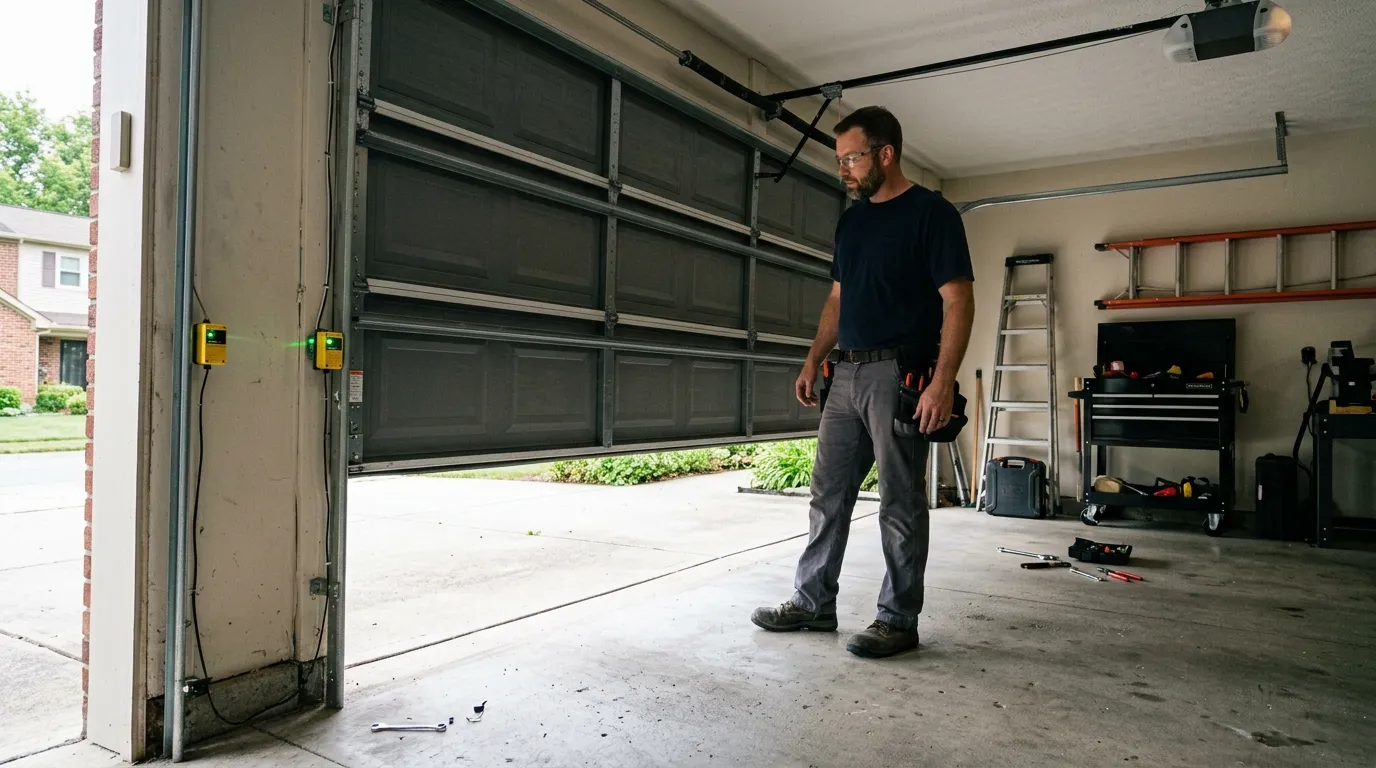
You call, we ask a few things over the phone: the door size, whether it's one panel or two, and roughly how old the current opener is. That's usually enough to bring the right unit and hardware on the first trip instead of a second one.
We set a window, not a guess. When we get to the house we look at the door itself before we talk opener - track alignment, spring condition, and whether the header has enough clearance for the drive head. A new opener bolted to a door that's already dragging on its rollers won't last, so if something else needs attention first we'll say so before any install starts, not after.
Most jobs are a same-visit install: old unit down, new rail and head up, travel and force limits set, safety sensors aligned, remote and keypad programmed. If your wall control or HomeLink setup is unusual we'll walk you through it before we leave so you're not guessing at it later.
We don't push a bigger unit than the door needs. A single-car door with a torsion spring doesn't need the same horsepower as a heavy double door, and we'll tell you which is which.
Most of the housing across this service area went up between 1992 and 2012, with the median build year sitting around 2002, and that same 2000s vintage carries across all 15 named communities we cover. That matters because it means a lot of original or first-replacement openers installed during that construction wave are now old enough for gears, capacitors, and logic boards to be reaching the end of their service life at roughly the same time, house after house.
Gainesville sits in a cold-moderate climate band, which is milder than the openers were probably rated for if they came from a national builder-grade batch. That's not a dramatic factor on its own, but repeated cold snaps followed by warm, humid stretches put more cycling stress on belt tension and drive gears than a steady climate would. Over fifteen-plus years that adds up.
With 18,712 owner-occupied houses across the service area, this isn't a rare fault - it's one of the calls we take most, and it clusters by neighborhood age rather than by any one street or subdivision.
A straightforward swap - same rail length, same door weight class, no header modification - usually runs under two hours. That includes pulling the old unit down, mounting the new rail and motor head, resetting travel limits, aligning the photo-eye safety sensors, and programming remotes or a keypad.
If the header bracket or the wiring doesn't match the new unit, or the door is a heavier double panel than the old opener was ever rated for, that adds time. We won't force an undersized opener onto a heavy door just to finish faster - that's the kind of shortcut that burns out a motor in a year or two.
At a median household income of $82,692 across the service area, most homeowners we see here go with a mid-tier belt-drive unit with battery backup rather than the cheapest chain-drive option, mainly for the quieter operation and the backup power during outages.
One honest limit: if your door's springs, cables, or rollers are worn out, we'll flag that before touching the opener. Putting a new motor on a door that's fighting bad springs just transfers the strain to the new unit, and it'll fail faster than it should.
The door hesitates before it moves, or it starts and stops partway up. The wall button works some days and not others. The remote range has shrunk to almost nothing. These are usually drive gear or logic board symptoms, not spring problems, and they show up more often on openers original to houses from that same 1992-2012 construction wave.
A grinding or straining sound at the motor head, especially on a heavier double door, often means the gear inside the drive head is stripped - common on chain-drive units that have been running since the house was built. That's a motor-and-gear replacement, not a lubrication fix.
If the door reverses right after it touches the floor, or won't close at all, check the photo-eye sensors near the bottom of the tracks first - a knock or drift there is more common than an actual opener failure, and it's a five-minute fix instead of a new unit.
An opener that runs but doesn't respond to any remote or keypad, even after a battery change, usually means the logic board has failed - at that age, replacement is almost always the better call than chasing a board repair.
A straightforward swap with no header or wiring changes usually runs under two hours. If the header bracket needs modification or the door is heavier than the old opener was rated for, plan on more time. We'll tell you which situation you're in before we start.
Yes. A single door on torsion springs doesn't need the same drive as a heavier double door. We size the unit to the door, not the other way around, so the motor isn't straining on every cycle.
Not usually. That's more often a photo-eye sensor near the bottom of the track that's been knocked out of alignment. Worth checking before assuming the opener itself has failed.
If we see worn springs, cables, or rollers during the install, we'll flag it and explain why. We won't put a new opener on a door that's fighting bad hardware - the strain transfers straight to the new motor.
By Neighborhood
We also handle opener installation in these Gainesville-area suburbs.
Call now or request a free quote - same-day service on most repairs, upfront written pricing.