Gainesville, GA · Garage Door Service
A plain look at what a garage door service call actually involves for Gainesville, GA homes built mostly between 1992 and 2012, and what the local climate does to that hardware.
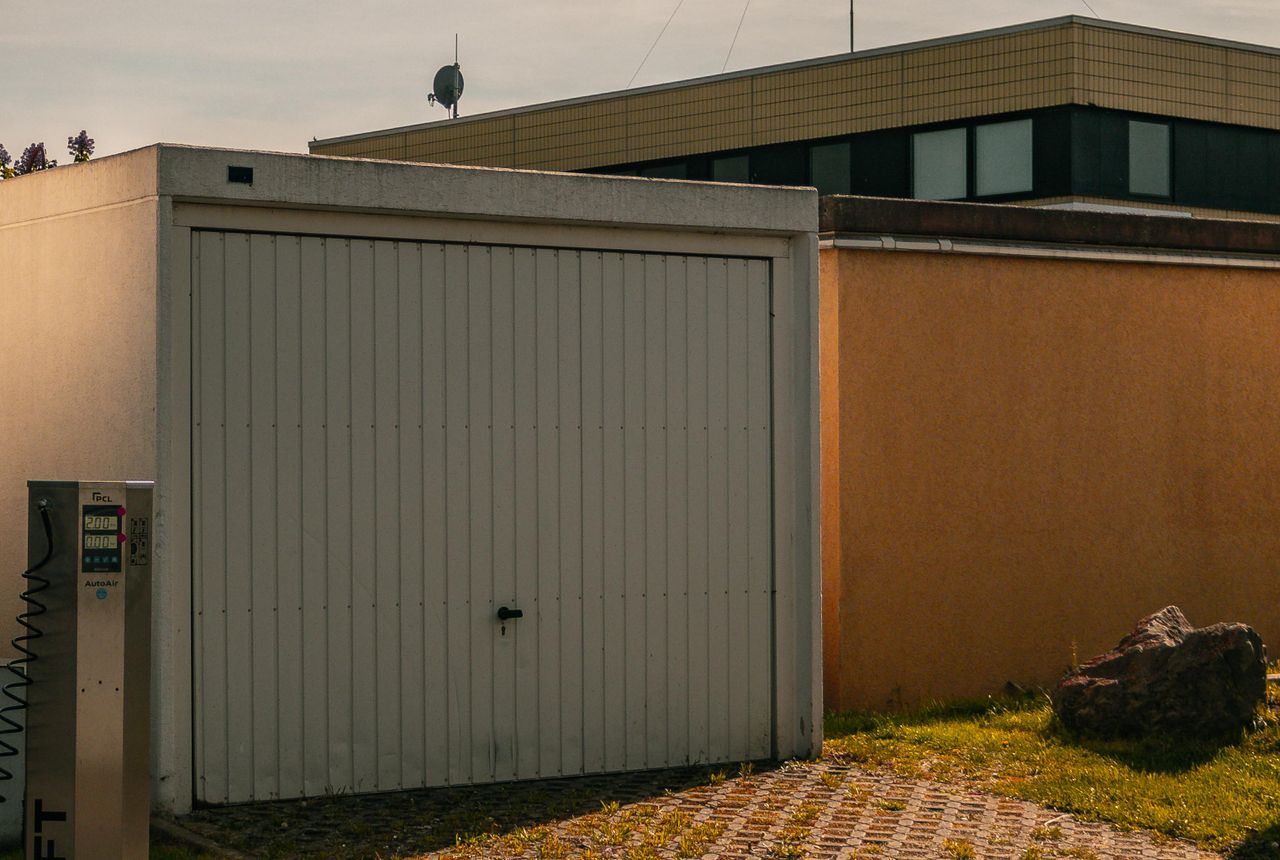
We're not going to throw a number at you here, because a fair one depends on what's actually wrong, and we haven't seen your door yet. What we can tell you is what drives the cost up or down. Most houses across our service area went up between 1992 and 2012, with the median build year sitting around 2002, so a lot of what we find is original hardware - first-generation openers, springs that have never been swapped, rollers that were fine for a decade and now aren't. Original parts on a 20-plus-year-old door usually cost less to fix than parts on something newer with a proprietary opener board, simply because the old stuff is standard-size torsion and extension gear that's easy to source. Where it gets pricier is when a homeowner has already had one bad repair done cheap - a mismatched spring, a track bent back into rough shape instead of replaced - and we have to undo that first. Our honest limitation: if the door itself has racked or the frame has shifted, that's not a service-call fix, and we'll tell you that instead of billing you for parts that won't hold.
This area sits in a cold-moderate band, which means your garage door hardware goes through real temperature swings across the year rather than staying in one comfortable range. That matters more than people think. Steel torsion springs lose a little tension as metal contracts in cold snaps, so a spring that's been fine all summer can suddenly feel weak or make a door struggle to lift on a cold morning. Extension springs and cables react the same way, and lubricant that was fine in July can gum up or thin out as temperatures swing. None of this is exotic - it's ordinary metal behaving like metal - but it's the reason a door that worked yesterday doesn't work today with no obvious cause. We see this most on homes where the opener and springs are original to a 1990s or early-2000s build, because that hardware has already done two decades of expanding and contracting without being replaced. It's not damage in the sense of something breaking outright. It's fatigue, and a service call at that point is often about catching it before the spring actually snaps under load, not after.
Across the 15 named areas we work in, the housing stock is overwhelmingly 2000s-vintage. That's a specific kind of garage door situation: not old enough that everything's obsolete, but old enough that a lot of first-owner hardware is aging out at the same time across a lot of houses built in the same few years. We cover a radius that runs from Oakwood six miles out to Dawsonville twenty miles away, and the pattern holds across most of that ground - subdivisions built in waves during the 1990s and 2000s boom, doors and openers installed once and mostly left alone since. With 18,712 owner-occupied houses among roughly 33,656 households in the service area, that's a lot of garages built to the same code, in the same window, aging the same way. What that means for a service call: we're usually not guessing at what we'll find. We're checking whether a specific generation of spring, cable, and opener has hit the point where it needs replacing rather than another adjustment.
Spring and fall are when we get the most calls for adjustment rather than outright failure - the door's a little heavier to lift or the opener strains, usually tension settling after a temperature swing. Summer heat expands metal and can loosen hardware that was snug all winter, so that's when we see more track and roller calls. Winter is spring-failure season here, plain and simple: cold-band conditions put the most stress on torsion springs that are already worn, and a spring that's been marginal all year is more likely to let go on a cold morning than a mild one. With a median household income of $82,692 in the area, most folks we talk to would rather catch a weak spring on a service call than wait for it to snap and take the cable or a panel with it. That's really the point of a service visit at any time of year - not just fixing what's broken, but telling you honestly what's close to it.
We haven't given you a set number here because it depends on the visit, but we'll always tell you what a call involves before we show up, not after.
A lot of houses in our service area are 1990s-to-2000s builds, and many still have their first opener. If it's original, we'll tell you plainly whether it's worth repairing or whether replacement makes more sense.
Cold snaps put extra load on torsion springs that are already worn from years of use. It usually isn't sudden - the spring was fatigued beforehand, and the cold just finished the job.
Yes, our coverage runs out to towns like Oakwood, Flowery Branch, Braselton, and Dawsonville, among others in the area.
Call now or request a free quote - same-day service on most repairs, upfront written pricing.