Gainesville, GA · Garage Door Service
Garage door repair and installs for Cumming, GA homes built around 1998. Gainesville Garage Door Pros travels the 18 miles for springs, openers, and panel work.
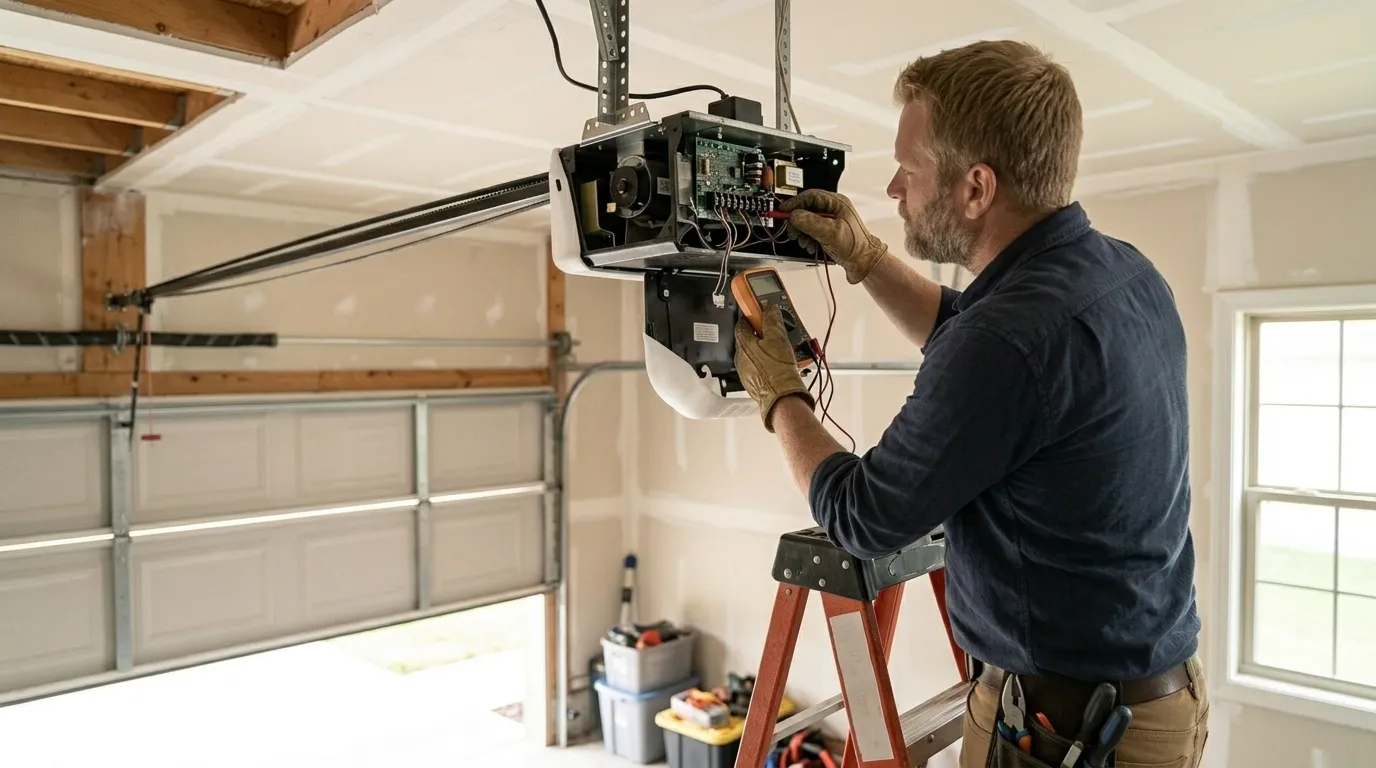
Cumming sits about 18 miles from our shop in Gainesville, on the far end of the territory we cover. We don't keep a truck stationed in Cumming, and we won't pretend otherwise - every job here means a drive out from Gainesville, same as it does for Dawsonville or Dahlonega further out. What that means in practice: we schedule Cumming calls in blocks rather than trying to fit one house in between two closer jobs, so plan on booking ahead rather than expecting a same-hour arrival. If your spring lets go on a Tuesday morning, tell us and we'll work you into the drive-out route as soon as we reasonably can, but we're not going to promise a response time we can't back up from 18 miles away.
The upside of the distance is that we treat it as a real route, not an afterthought. We bring the parts a 1990s-to-2000s door in this area is likely to need, because we've already sized up what the housing stock looks like before we leave Gainesville. That planning matters more here than it would on a closer job, since a second trip for a part we didn't bring costs both of us the better part of an hour each way.
Most of Cumming's housing went up around 1998, which puts it a few years ahead of the broader service area's 2002 median but still squarely in that same late-90s-to-2000s building wave. That matters more than it sounds like it should. A house built in 1998 almost always shipped with a steel sectional door, extension or torsion springs sized for standard-lift residential hardware, and an opener from that era's chain-drive generation - not the older side-mounted torsion setups you'd find on a house from the 1960s, and not the insulated, code-updated doors going into new construction today.
With roughly 2,614 households in this pocket of the territory, we're not talking about one style of house repeated a thousand times, but the age band is consistent enough that the failure patterns repeat. Original springs from a 1998 install have had over two and a half decades of cycles on them, which is well past the point most torsion springs are rated for. Original openers from that build era are also reaching the end of their working life - not broken yet, necessarily, but showing it in slow response, drift, or a motor that runs hotter than it used to.
Given the age of the housing stock, the calls we get from Cumming lean heavily toward torsion spring replacement and opener swaps rather than the structural or track-alignment repairs you'd expect on an older home. A door installed in the late 1990s is old enough that its original spring has almost certainly cycled past its rated life, and a lot of the openers from that period are chain-drive units nearing 25-plus years of service - past the point where a repair is worth it versus a straight replacement.
We also see panel and hardware wear that tracks with income and household patterns in the area: median household income here runs around $79,073, a bit under the wider service area's $82,692, and that shows up less in the doors themselves and more in how long owners wait before calling. A rattling opener or a slow-closing door in a 1998-built house is often original equipment finally giving out, not damage from an accident - which is a different diagnosis and a different fix than what we'd expect walking into a newer build.
Cumming's climate classification is cold-moderate, which is not the harsh freeze-thaw cycling of the upper Midwest but still enough temperature swing over a year to stress steel panels, weatherstripping, and the lubrication on rollers and tracks. Combined with a door that's likely original to a 1998 build, that means we're often looking at hardened lubricant, a bottom seal that's cracked from years of expansion and contraction, and rollers that were fine ten years ago but are now the reason the door shudders on the way up.
One honest limitation: if a door's spring is original and its opener is original, replacing just the failed part sometimes isn't the better financial move - we'll tell you when a full opener swap makes more sense than patching a 25-year-old unit, even if that's a bigger job than the one you called about. We're not going to talk you into replacing a door that just needs a spring, but we're also not going to quietly replace a spring on an opener that's about to fail anyway without mentioning it.
No. We run out of Gainesville and drive to Cumming for every job, about 18 miles each way. We don't keep a depot or truck stationed locally, so response depends on our route that day rather than a fixed local response time.
If your house was built around 1998, an original chain-drive opener pushing 25-plus years is at or past typical service life. It may still run, but slow response, heat, or intermittent behavior usually means it's near the end rather than needing a quick fix.
Torsion springs are rated for a set number of open-close cycles, not years. A spring original to a 1998 install has likely logged well beyond its rated cycles by now. Replacing it with a correctly sized spring, rather than a patch fix, is usually the right call at that point.
Sometimes, but not always. If the motor, gears, and safety sensors are original to a house built in the late 1990s, a repair can buy a little time but often fails again soon after. We'll tell you honestly which way the numbers point before we start work.
Call now or request a free quote - same-day service on most repairs, upfront written pricing.